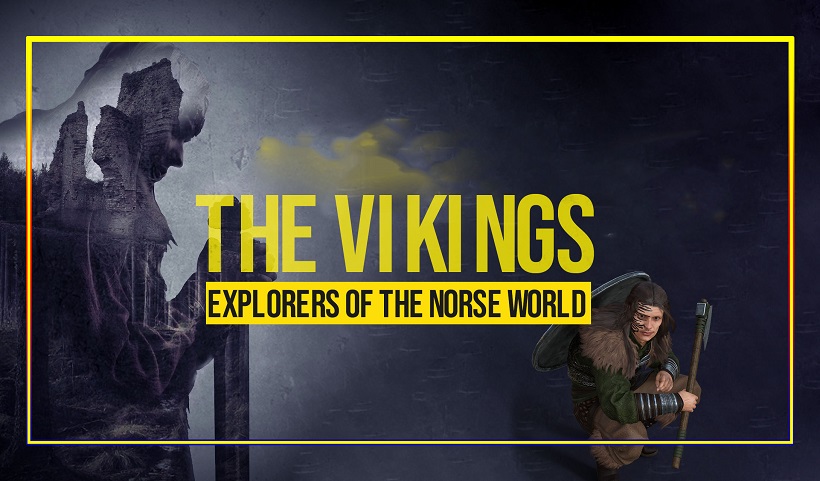
The Vikings, seafaring warriors and traders of the Norse world, have left an indelible mark on history, capturing the imaginations of people with their daring exploits, advanced seafaring technology, and rich cultural heritage. Emerging from the Scandinavian region during the late eighth century, the Vikings embarked on a remarkable era of exploration, expansion, and influence that would extend across Europe and beyond.
The Viking Age, spanning from the late eighth to the early 11th century, marked a period of significant socio-political changes in Scandinavia. These skilled sailors and fearsome warriors hailed from present-day Denmark, Norway, and Sweden, and they ventured far beyond their homelands, navigating the rough seas of the North Atlantic, the Baltic, and beyond. Their iconic longships, characterized by their shallow drafts and ability to navigate both open seas and shallow rivers, became instrumental to their success in raids and exploration.
One of the most notorious aspects of Viking history is their reputation as raiders. The Vikings conducted raids along the coasts of Europe, targeting monasteries, villages, and trading centers. The image of Viking warriors descending upon unsuspecting communities, their dragon-headed longships looming on the horizon, has become ingrained in popular culture. The motives behind these raids were multifaceted, encompassing the search for wealth, expansion of territories, and the desire for prestige and honor.
However, the Vikings were not solely warriors; they were also accomplished traders and explorers. Their trading networks extended from the British Isles to the Byzantine Empire, and they engaged in commerce with various cultures, exchanging goods, ideas, and technologies. The Vikings’ navigational skills allowed them to reach as far as North America, long before Christopher Columbus set foot in the New World.
The Viking society was organized into clans, with chieftains leading groups of skilled warriors. Despite their fearsome reputation, the Vikings had a rich cultural and social life. They revered gods such as Odin, Thor, and Freyja, and their mythology, preserved in the Poetic and Prose Eddas, provides insights into their worldview. The Vikings were skilled craftsmen, creating intricate metalwork, woodcarvings, and textiles. Their runic alphabet, known as the Futhark, was used for inscriptions on stones, weapons, and personal items.
While the Vikings are often associated with brutality and violence, it is essential to recognize the complexity of their civilization. They established trade routes, settled in distant lands, and contributed to the cultural tapestry of the medieval world. The impact of the Vikings resonates through the centuries, influencing art, literature, and even modern-day exploration.
In conclusion, the Vikings were a multifaceted people whose legacy extends far beyond their notorious reputation as raiders. Their contributions to trade, exploration, and cultural development have left an enduring mark on history. By delving into the rich tapestry of Viking civilization, we gain a deeper understanding of the dynamic forces that shaped the medieval world and appreciate the lasting legacy of these seafaring adventurers.